Plan a Folded Family Note in Its Reading Order
Plan a folded family note in the order it will be opened, keeping the greeting and message clear before a drawing or decorative border fills the available panels.
Shopping note: The retailer links in this article are ordinary links. We are not currently using affiliate tracking. If a link earns us a commission in the future, we will label it. Our disclosure.
A folded note offers several small drawing spaces, which can make the writing order surprisingly easy to lose. A greeting lands on the back, or an inside picture appears upside down when the note opens. Use a plain draft to discover the panels before making the final version with a child.
Give the fold a test opening
Start with spare paper of a similar shape to the final sheet. Make the intended simple fold and decide which edge opens. Close it, hold it as the recipient would and mark the front lightly. Then open it and mark the inside message space.
Let the child try that opening sequence too if they want to participate. Seeing the paper move can make the orientation clearer than explaining an imagined flat layout. Keep the draft available beside the final sheet rather than relying on a memory of which panel was which.
Place the words before the drawing
Ask what the note is meant to say and who will receive it. Write a short greeting on the draft and leave a clear inside area for the message. A personal sentence can be more meaningful than filling every panel with a long copied rhyme.
Check the recipient's name and the direction of the writing. If a child is contributing marks or a drawing, agree which area is theirs and whether an adult will add words elsewhere. Do not treat a child's picture as an empty background for adult writing without asking.
Add detail around the reading path
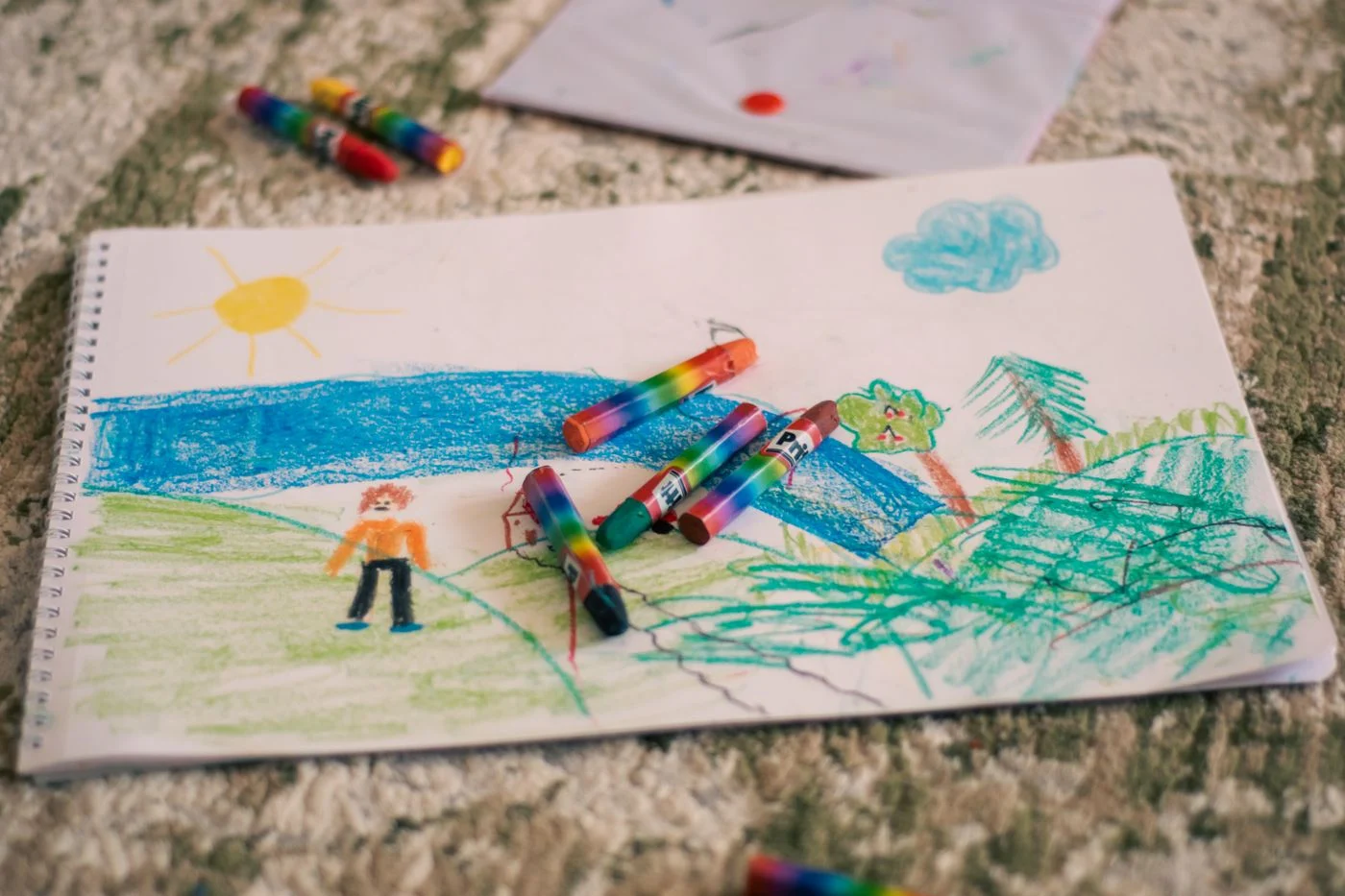
Choose one small front detail or border rather than decorating every remaining gap. Test crayons, pencils or other suitable materials on spare paper. Keep the lettering easy to read and let the materials reach their appropriate ready condition before closing the note.
A folded sheet should still close comfortably. Heavy attachments or raised pieces can change that movement and make an envelope unsuitable. A simple flat drawing often allows the message and the fold to remain the main features.
Read it once as the recipient
Close the finished note and open it in the intended direction. Read the greeting, message and any signature in order. This last check can reveal an inverted panel or a name hidden beneath the crease while there is still time to make a clear correction.
Ask whether the maker wants to keep a personal photograph before the note is given, and agree any sharing separately. Return the materials to their ordinary place when the small project is complete.
The draft does not need to survive unless it has another useful role. Its purpose was to make the physical reading sequence understandable. A successful family note can remain modest: one clear fold, a readable message and a drawing whose place was chosen together rather than fitted around a last-minute writing problem.
Related reading
Pack a Handmade Family Gift With Its Care Information, Ask Before Sharing a Child’s Drawing.