Ask Before Sharing a Child’s Drawing
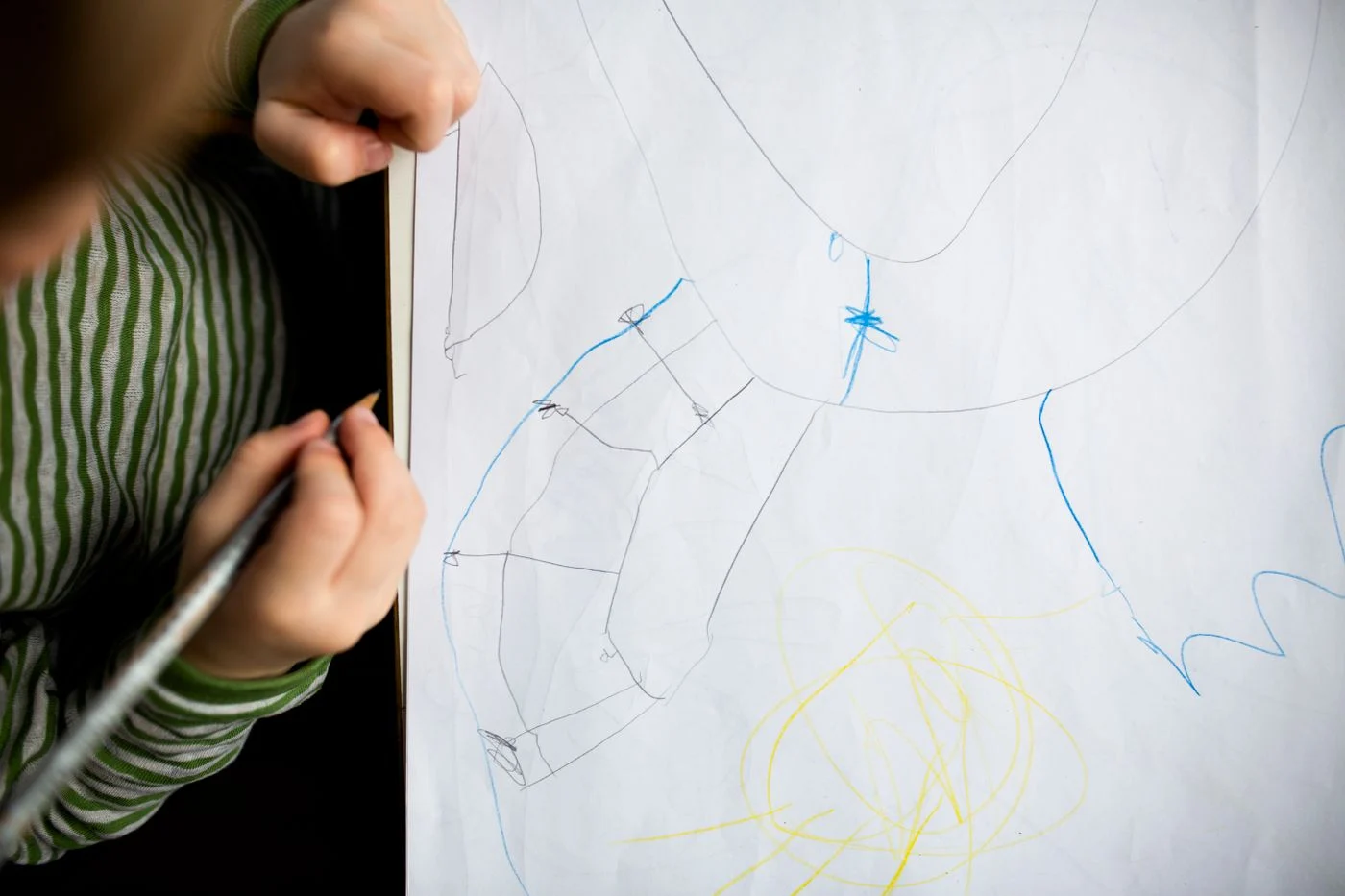
Ask about sharing a child’s drawing before sending a photograph, keeping the intended audience and the artwork separate from an assumption that every family moment is public.
Shopping note: The retailer links in this article are ordinary links. We are not currently using affiliate tracking. If a link earns us a commission in the future, we will label it. Our disclosure.
Name the particular sharing choice
A drawing on the kitchen table can prompt an immediate urge to send a photograph to relatives. Pause long enough to name the actual choice: the work you want to show, the people who would receive it and the reason for sharing. A small specific conversation is clearer than a broad question about whether artwork can ever be photographed.
Keep this as an ordinary family agreement, not a claim about legal permission or a universal rule for every age. The responsible adults need to use appropriate judgment for the real child and circumstances, with privacy and household boundaries in view.
Separate viewing from sending
Someone may be happy to show a drawing to a person in the room and feel differently about a photograph sent elsewhere. Do not assume the first choice includes the second. Explain the intended audience in a way appropriate to the person rather than hiding it behind a vague promise that only family will see it.
If the answer is uncertain or the child does not want the work sent, leave that sharing task unfinished rather than press for agreement. The artwork can remain a private family object without needing another audience to make it worthwhile.
Check what the photograph contains
Look beyond the page before taking or sending an image. Names, school details, another person's belongings or private household information may appear around the drawing. Keep unnecessary context out of the proposed image and respect other people's information too.
Do not alter the original work simply to produce a neater photograph without the maker's agreement. Moving the page appropriately for a view is different from adding color, changing words or cutting the artwork into another shape. Keep those decisions distinct.
Keep the audience bounded
Use the specific sharing arrangement actually agreed and the real tools' privacy settings appropriately. Do not promise that a message can never be forwarded or that an online setting guarantees a particular outcome. If a wider use is proposed later, treat it as a new question rather than a continuation of the first choice.
Adults should keep their own posting or messaging decisions consistent with the family agreement. A private conversation about artwork should not become a test the child must pass before receiving attention or praise.
Preserve the original household role
After any agreed photograph, give the actual drawing its suitable drying, display or storage route. The sharing decision does not settle how long the page stays on the table or whether someone else may change it. Those are separate practical questions.
A useful pause protects the distinction between enjoying a creation and distributing an image of it. The family can appreciate the work directly, choose a small agreed audience or keep it entirely private. None of those choices requires the drawing to become a permanent public record of an ordinary creative moment.
Related reading
Give Children’s Artwork a Drying and Storage Route, Give a School Project Display an Agreed End Point.