Give Children’s Artwork a Drying and Storage Route
Prepare a suitable place for current artwork before the family table needs to return to dinner.
Shopping note: The retailer links in this article are ordinary links. We are not currently using affiliate tracking. If a link earns us a commission in the future, we will label it. Our disclosure.
Read the materials’ requirements first
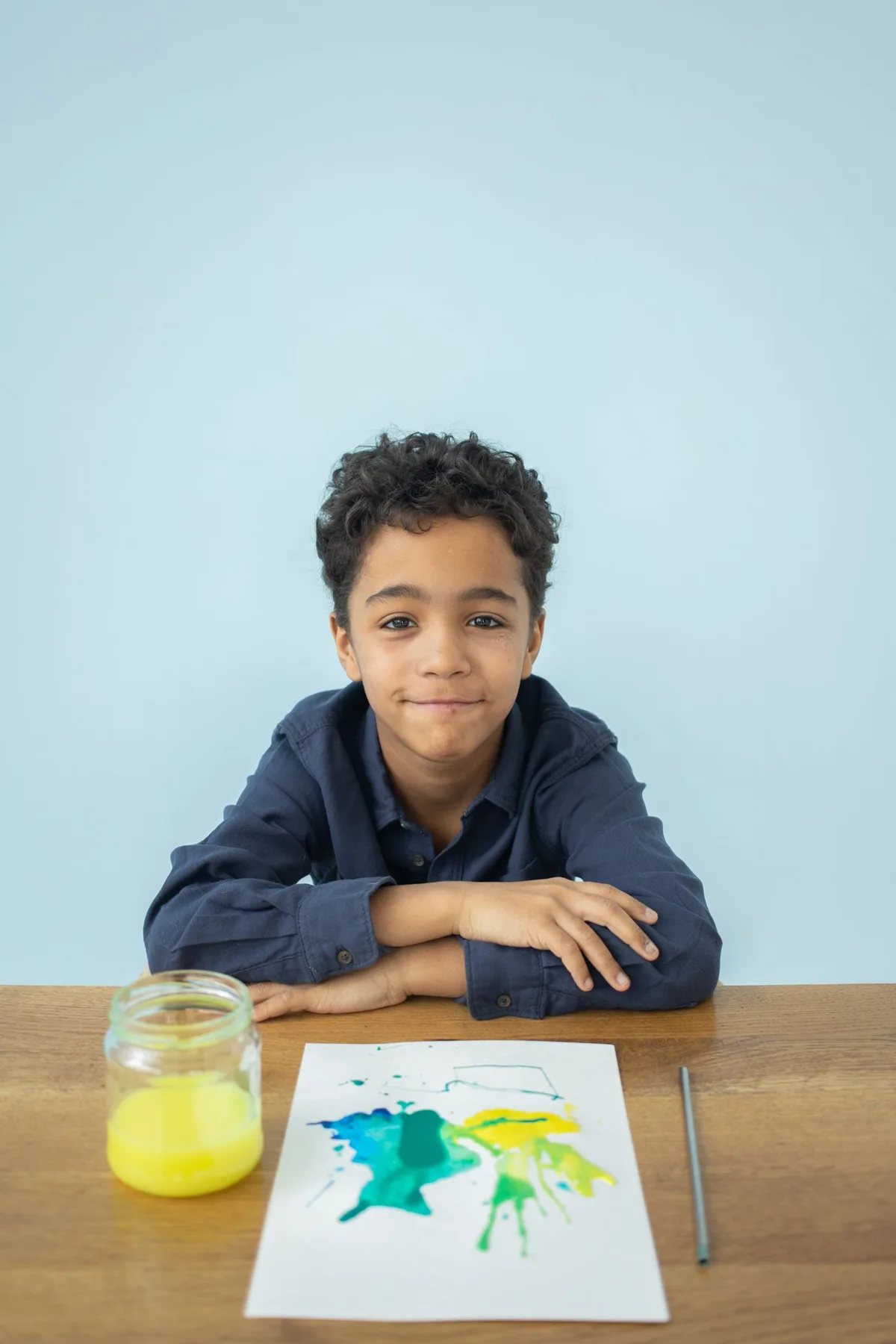
A family art session can leave a table covered with wet paper just when dinner needs to begin. Before opening supplies, check the materials' age, use, supervision and drying guidance. Choose an activity suitable for the child and the available space rather than assuming every craft can be paused and moved immediately.
Prepare the surface according to its care needs and the art products' instructions. Keep food preparation separate where required. The household table may serve several jobs, but the change between them needs appropriate cleaning and a place for the artwork to go.
Choose a defined drying position
Identify a suitable location for the current pieces before the session starts. Keep it stable, protected from unsuitable contact and clear of walking routes, equipment and household access that could make the arrangement inappropriate. Do not improvise a high or narrow shelf merely because it is temporarily empty.
Measure the likely paper or project size. A tray may work for a particular activity if it supports the objects appropriately, while other materials need another arrangement. Follow the relevant product directions rather than treating every artwork as a flat dry sheet that can be stacked.
Keep the active supply manageable
Put out the materials needed for the chosen activity and keep other supplies suitably stored. A full collection on the table can make cleanup and supervision harder. Keep original labels and safety information available and follow the products' requirements for use and storage.
Children can participate in suitable setup and return tasks with the necessary adult help. Choose clear jobs, such as placing an appropriate item in its defined position, rather than expecting the child to sort every material after a long session. The adult should handle anything that requires their judgment or supervision.
Separate drying from keeping
Once the project is appropriately ready, decide where it belongs next: a current display, a portfolio or another suitable destination. Do not let the drying position become permanent storage for every piece. Keep selected work identifiable if names or dates matter to the household.
Make the keeping decision thoughtfully and in a way appropriate for the child. There is no universal number of pieces that a family should retain. A manageable collection with clear storage can be more enjoyable than a stack that cannot be opened without damaging or losing things.
Return the table through a clear handover
Clean and store supplies according to their instructions and restore the table appropriately for its next use. Keep used materials separate from clean household items and follow relevant disposal guidance. Leave the drying position understood by other family members so it is not cleared accidentally.
Our shared-table guide helps coordinate several activities. The evening reset guide supports a manageable return. Planning the artwork's next position before the session begins can remove the pressure to finish every project just because the room needs to change.
Keep a note of the material and the project owner with the work where that helps the household avoid accidental clearing. Do not mark an artwork in a way that damages it; use an appropriate separate identifier if needed. When the work is ready, make the next destination clear before another session begins. A drying area that contains several completed projects is no longer available for its original job. Review the selected collection at a calm time and keep any storage suitable for the actual materials, rather than assuming every piece can be folded into the same portfolio.
Artwork-route questions
Do I need a dedicated drying rack? Only if the materials, dimensions and actual use justify one. A suitable existing arrangement may work for a modest activity.
Should every piece be displayed? Choose a household-appropriate approach with the child where suitable. Display and long-term keeping are separate decisions.
What if the table is needed before the work can move? Choose a different activity or suitable location in advance. Do not override the materials' instructions or damage the project simply because the drying stage was left out of the plan.