Give a Shared Bedroom Clear Personal Storage Positions
Separate each child’s everyday belongings while keeping shared furniture and the room route usable.
Shopping note: The retailer links in this article are ordinary links. We are not currently using affiliate tracking. If a link earns us a commission in the future, we will label it. Our disclosure.
Separate personal and shared jobs
A shared bedroom can become frustrating when every shelf holds a mixture of belongings and nobody knows what may be moved. Begin by identifying personal everyday items and objects genuinely shared. The categories may be simple: each person's current books and clothes, with a separate suitable position for shared equipment.
Plan the room around the actual children and their needs, with appropriate adult judgment and supervision. Follow all furniture and product safety, installation and use information. A storage arrangement should not encourage unsuitable climbing or access merely because a shelf is the only empty position available.
Choose reachable everyday positions
Put frequently used suitable objects where the relevant person can access them appropriately, with help where needed. Keep items that need adult control in a suitable separate position. Do not assume that equal shelf height is the same as fair or practical access for children with different needs.
Measure the objects and the usable storage area. Leave room to return belongings without a precise stacking routine. Follow load and anchoring instructions for furniture and obtain suitable help for installation. The room should remain usable when shelves are occupied, not only when the contents have been removed for planning.
Use clear personal identifiers
A name or suitable image can identify a position without requiring every container to be a different color. Keep labels readable and easy to update appropriately. If children share a collection, distinguish its storage from personal belongings so the boundary does not depend on remembering a complicated rule.
Discuss the arrangement in a way appropriate to the household. Adults can help establish what is shared, what is personal and how to ask before moving another person's belongings. Storage supports that conversation but cannot resolve every disagreement by itself.
Protect the room’s ordinary routes
Open drawers and doors and check access around the beds in the room's everyday state. Keep exits and essential routes clear. Do not use floor baskets as permanent storage if they obstruct the movement needed for dressing or getting in and out of bed.
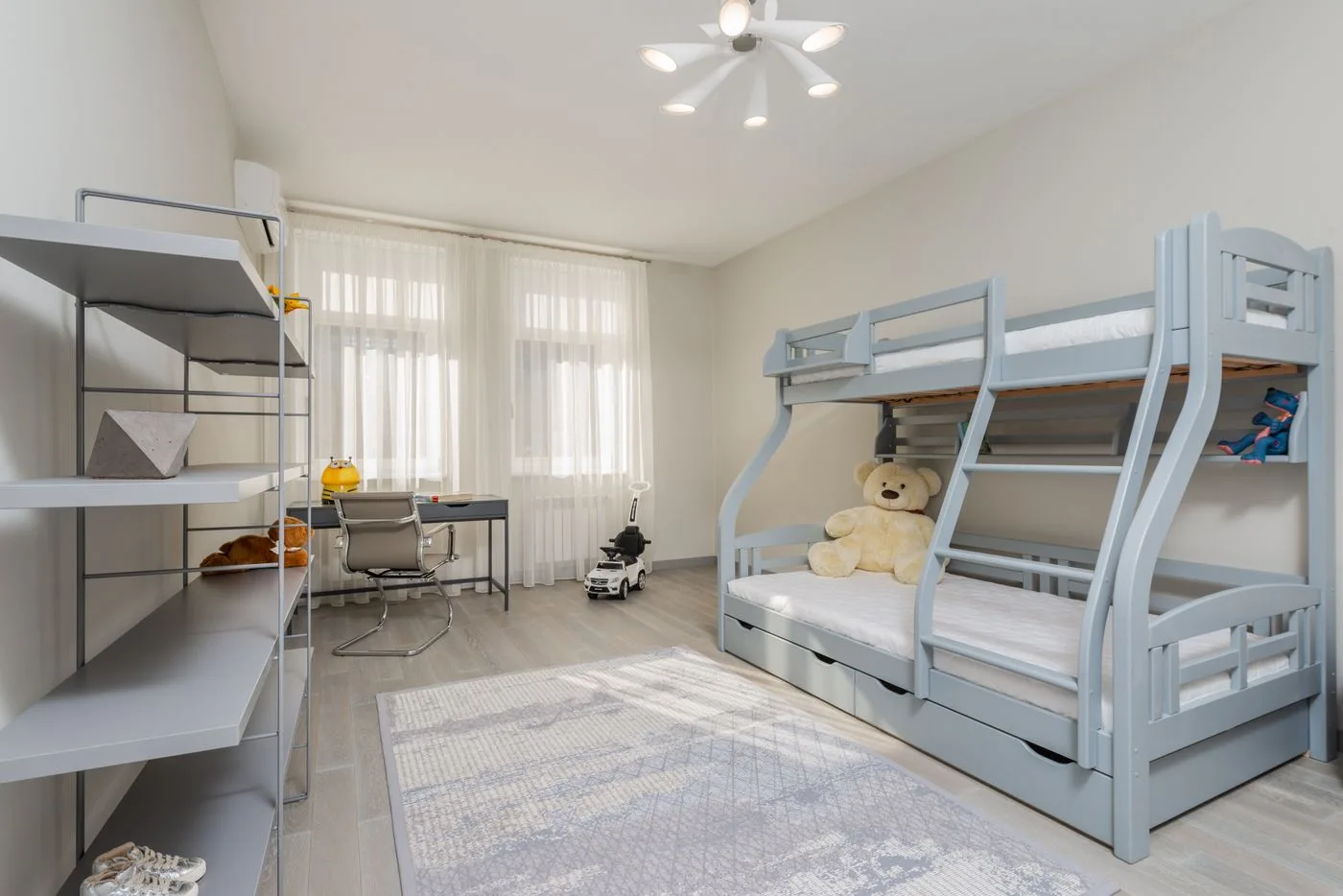
Follow the relevant instructions for beds and other furniture rather than treating their surfaces as general storage. A photograph of a shared room may show an attractive arrangement without revealing its required installation or use conditions. Choose the actual products and placements appropriately for the household.
Review the arrangement as needs change
Notice which positions work and which objects repeatedly end up elsewhere. Adjust one boundary at a time before buying more furniture. A child may need a different book position or a larger current-clothes section without the entire room requiring a redesign.
Our bedroom refresh guide supports appropriate changes. The linen storage guide can keep spare bedding out of personal shelves. A shared room works better when daily objects have clear homes and the larger household supplies do not quietly take over every available compartment.
Test the arrangement during the ordinary dressing or reading routine, not just after all the belongings have been carefully placed. Ask each child about practical retrieval in a way suited to their age and understanding. Keep the adult’s responsibility for appropriate access and household rules clear. If a shared object repeatedly lands in a personal section, decide whether the category or location needs changing. Avoid adding labels for every small item before the main boundaries work. A few understandable positions can be more useful than a wall of compartments that only the person who organized them knows how to maintain.
Shared-room questions
Must each child have the same number of containers? Practical access and current needs matter more than an identical count. Explain the arrangement clearly and review it when needs change.
Can one shelf hold both children’s belongings? It can if the division remains understandable and suitable. A clear boundary may be enough without adding another piece of furniture.
What if personal items keep moving? Revisit the conversation and the storage position together. The cause may be an inconvenient location, an unclear shared category or a room task that has not been planned.