A Rental-Friendly Bedroom Refresh Without a Cart Full of Décor
Improve a bedroom with layout, lighting and textiles before committing to purchases or permanent changes.
Shopping note: The retailer links in this article are ordinary links. We are not currently using affiliate tracking. If a link earns us a commission in the future, we will label it. Our disclosure.
Start with the real day
A bedroom refresh can begin with a familiar frustration: the bedside surface is crowded, the light feels harsh or the room has collected furniture that does not work together. In a rental, permanent changes may be limited, but that does not mean every improvement requires another decorative object. Start with how the room supports ordinary evenings and mornings.
Choose one practical problem and one visual direction. The practical problem might be nowhere to set a book. The visual direction might be quieter color or less pattern. These decisions keep shopping focused. Check the lease and any building rules before painting, drilling or changing fixtures. A product described as removable still needs to be appropriate for the surface and permitted in your circumstances.
Rearrange before replacing
Remove items that do not belong in the bedroom and test the layout with what remains. Keep walking routes and access to doors, windows and storage in mind. A bedside table that is too large may work better elsewhere, while a smaller existing piece could do the job. Do not move heavy furniture alone or ignore anchoring and assembly instructions during the rearrangement.
Consider the view from the doorway and from the bed. A crowded shelf may dominate the room even when most of the floor is clear. Group necessary small items in one place rather than adding several decorative trays. Leave some surface space unused. That empty area has a practical role when you set down a glass, a book or tomorrow’s clothing.
Use textiles as a limited color system
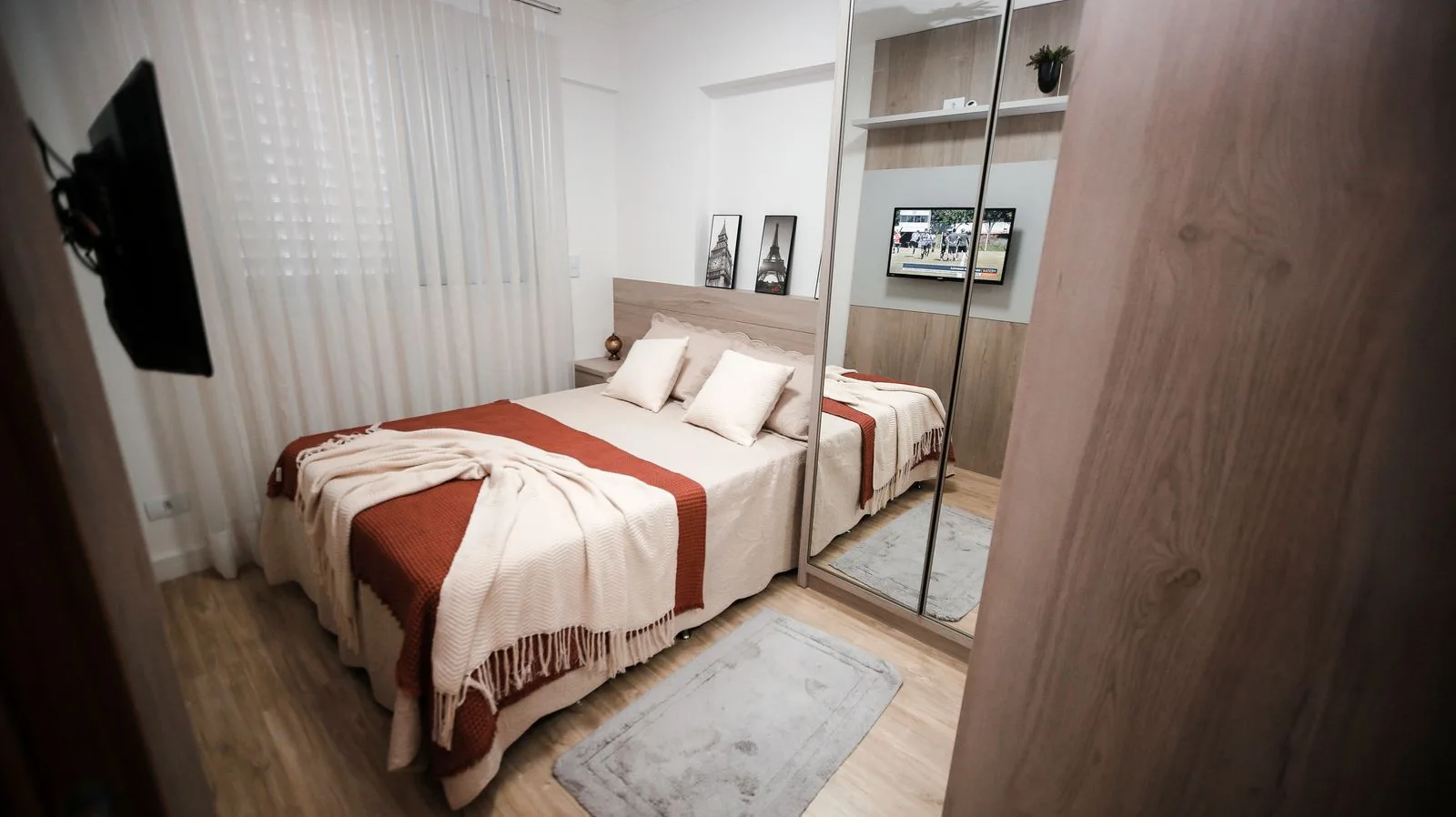
Choose a small family of colors that works with the existing walls and main furniture. Bedding occupies a large visual area, so replacing a worn cover can change the room more than collecting many small accessories. Check sizes, closures and care requirements before buying. A fabric that requires more maintenance than you want may become an inconvenience despite looking appealing.
Work with pieces you already like. A patterned blanket can provide the color direction for plain pillowcases, rather than requiring a completely matching set. Compare texture and how the fabric feels where possible, keeping return conditions in mind. Avoid buying extra layers solely to reproduce a styled photograph. Keep the bedding arrangement suitable for the room and your own comfort preferences.
Choose lighting and storage for real use
A bedside lamp should support the activity you want to do there and fit the available surface. Read its specifications and instructions, including compatible bulbs and placement requirements. Consider where cords will run before ordering. Decorative lighting that occupies the entire bedside table may solve atmosphere while creating a new storage problem.
Make a small purchase list and pause before adding accessories. If the revised layout and a lamp resolve the room’s main frustration, the refresh may be complete. For rental-friendly products, check removal instructions and surface limitations rather than trusting a broad marketing claim. Keep original fittings where required and document changes appropriately. A restful-looking room can come from fewer competing elements and better everyday function, without an expensive transformation.
A short checklist to keep
Keep these decisions somewhere useful rather than turning them into another elaborate system. For this project, the most important comparison is between what already works and what a purchase would actually change. Can improve the usefulness of an existing reading spot. It needs suitable placement, power access and bulb compatibility. That tradeoff is worth weighing before choosing the bedside lamp simply because it appears in an attractive room or outfit.
An alternative is to focus on the everyday duvet cover. Changes a large visual surface without repainting. Sizing and laundering requirements need checking. Compare the two jobs instead of assuming both purchases are necessary. Start with the option that addresses the repeated inconvenience you have identified. When neither problem is happening in your household, keep using what you have. A buying guide should make it easier to decide against an unnecessary purchase as well as help you choose a useful one.
- Name one practical problem first.
- Check lease and surface requirements.
- Test the layout with existing pieces.
- Compare textile sizes and care labels.
Shop with a purpose
Options to consider
These are research starting points, not hands-on test results. Compare current specifications, dimensions, care instructions, return terms, and availability with the retailer before buying.
Bedside lamp
Can improve the usefulness of an existing reading spot.
The tradeoff: It needs suitable placement, power access and bulb compatibility.
Explore at the retailer ↗Everyday duvet cover
Changes a large visual surface without repainting.
The tradeoff: Sizing and laundering requirements need checking.
Explore at the retailer ↗A few common questions
Do I need to buy everything mentioned?
No. Begin with what you own, then choose only the item that solves a specific problem. The bedside lamp and everyday duvet cover have different jobs; neither is a requirement for following the advice.
What should I compare before ordering?
Check dimensions or garment measurements where relevant, current care and use instructions, delivery charges and return conditions. In particular, remember this tradeoff: It needs suitable placement, power access and bulb compatibility. Use the retailer’s current information rather than assuming a photograph answers those questions.