Make an Active Toy Collection Easy to Find and Return
Separate the currently used collection from stored items without creating a complicated rotation schedule.
Shopping note: The retailer links in this article are ordinary links. We are not currently using affiliate tracking. If a link earns us a commission in the future, we will label it. Our disclosure.
Define what is currently available
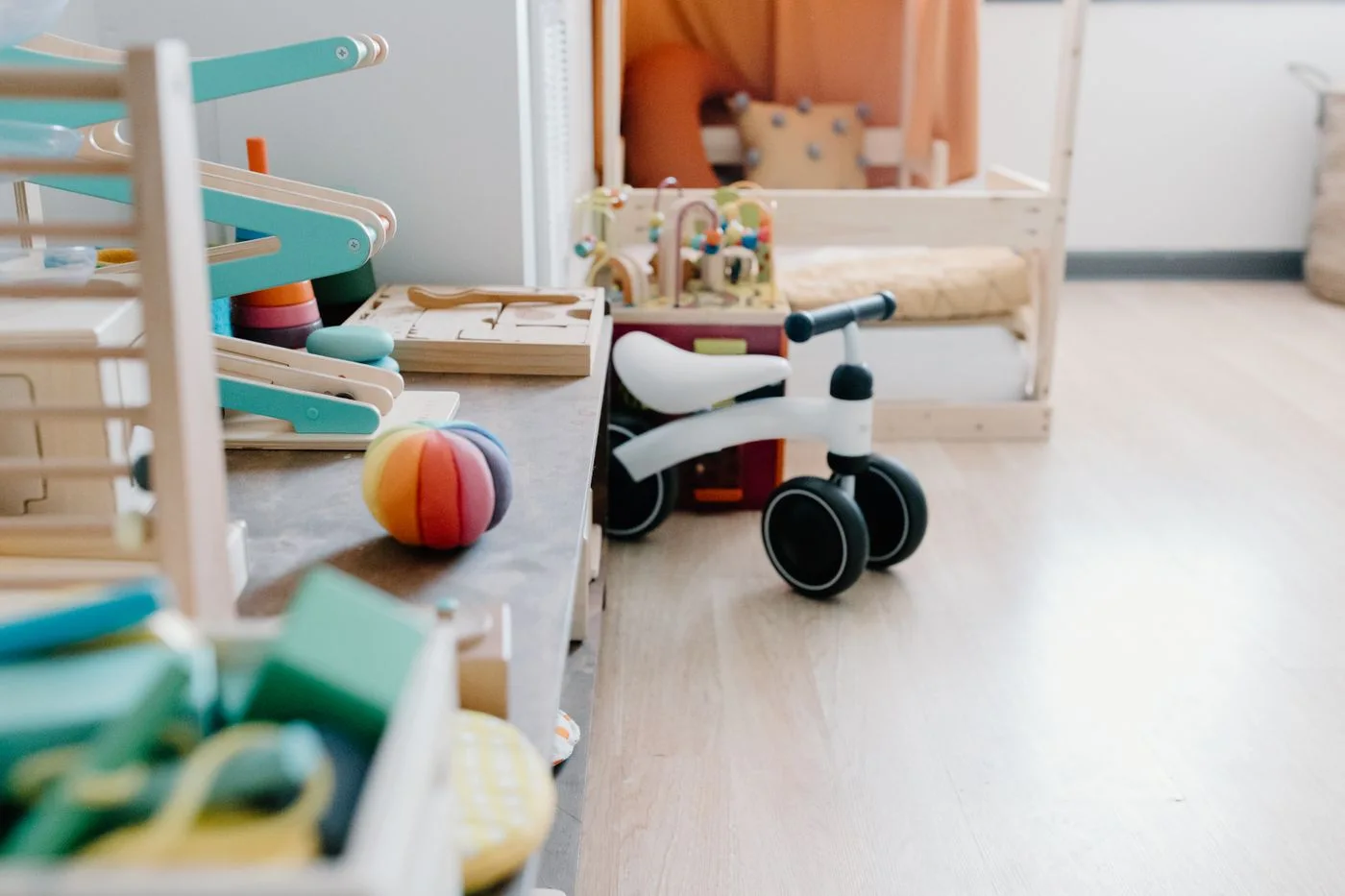
A toy rotation can sound like another household job if it begins with a strict calendar and several labeled boxes. Start with the simpler question of what is currently available for appropriate play. Keep a manageable collection in suitable accessible storage and identify what is stored separately.
Follow the toys' age and safety information and consider who can reach them. The adult remains responsible for suitable selection, supervision and storage. A smaller visible collection is an organizational choice, not a guaranteed developmental method or a substitute for checking the objects themselves.
Keep sets and information together
Store parts with their correct set and keep relevant instructions and safety information available. Do not remove packaging information that is needed to identify suitability or care. If a set is incomplete, check whether the missing part affects appropriate use before returning it to the active collection.
Choose containers suitable for the objects and household. Heavy, sharp or small items may have different storage requirements. Do not use one decorative basket as the default for every kind of toy. The container should make retrieval and return clear without concealing a suitability problem.
Label the stored collection plainly
Use readable words or suitable images to identify the contents. Choose categories that correspond to real sets or activities, such as a named building set, rather than vague labels like extra toys. Keep the stored location suitable and follow the relevant product and furniture instructions.
Record only the information that helps. A detailed inventory of every small piece may be unnecessary for an ordinary household collection. A clear note of the set and any essential associated parts can be enough. Update the label when contents change so the storage does not become misleading.
Choose a natural review point
Review the active collection when interests, household needs or room use change. There is no need to claim a universal rotation frequency. Notice what is used, what is difficult to return and what needs inspection or care. Let those observations guide a practical change.
If stored items are brought back, check their condition, suitability and completeness again. Do not assume that something remains appropriate simply because it was used previously. Keep any cleaning or maintenance aligned with the product's care instructions, and separate items that need attention.
Keep the return routine small
Give the active collection a clearly defined home and leave usable room for putting objects back. If returning a set requires precise stacking or several hidden lids, simplify that stage. Appropriate participation by children can be part of the routine, with adult help and supervision as needed.
Our shared family-room guide helps connect storage with the rest of the room. The evening reset guide supports a manageable closing task. Judge the system by whether suitable objects can be found and returned, not whether the stored boxes form a perfect matching row.
Before putting a stored set back into use, compare its contents with the relevant instructions and the current household needs. Keep uncertain or damaged pieces separate while they are assessed. Note where the set will return at the end of play, not just where it looks attractive when arranged. If a new set enters the active collection, review the available storage rather than automatically adding another container. The purpose of the review is a suitable manageable collection, not a requirement to follow a fixed calendar or buy a succession of matching boxes.
Toy-collection questions
Does rotation require buying extra containers? No. Suitable existing storage may work if the categories and labels are clear. Check the dimensions and safety requirements before purchasing anything.
Should a child choose what stays active? Involve them in ways appropriate to their age and understanding, while the adult handles suitability and household requirements. The decision can be shared without making it entirely their responsibility.
What if stored toys are never requested? Review whether they still have a realistic role. Keep suitable items for a clear reason, and make any donation or disposal decisions honestly based on condition and completeness.