Keep a Playroom Building Area Clear Without Hiding Every Toy
Choose an active floor zone, appropriate nearby storage and a defined pause for unfinished projects.
Shopping note: The retailer links in this article are ordinary links. We are not currently using affiliate tracking. If a link earns us a commission in the future, we will label it. Our disclosure.
Choose the current kind of play
A playroom floor can fill with several activities until none has enough usable space. Start with the play the household currently needs to accommodate and the equipment's relevant age and safety information. A building project, reading corner and craft activity may need different surfaces and storage.
The room plan should support appropriate play and supervision rather than prescribe how a child should develop. Keep exits and ordinary routes available and account for younger children, pets and other household users. A clear floor area is useful only when the objects and arrangement are suitable for the people who can reach it.
Mark a practical active zone
Choose a suitable area where the intended activity can happen without spilling into the doorway. Use the room's actual furniture and floor conditions to decide the boundary. A rug can visually define a zone if it is appropriate, stable and cared for according to its instructions, but it is not required for every room.
Check access to shelves, cupboards and windows while the zone is in use. Do not count space beneath an opening drawer as permanently available play area. If the room changes for visitors or another task, identify where the active objects will go during that change.
Store pieces near the activity
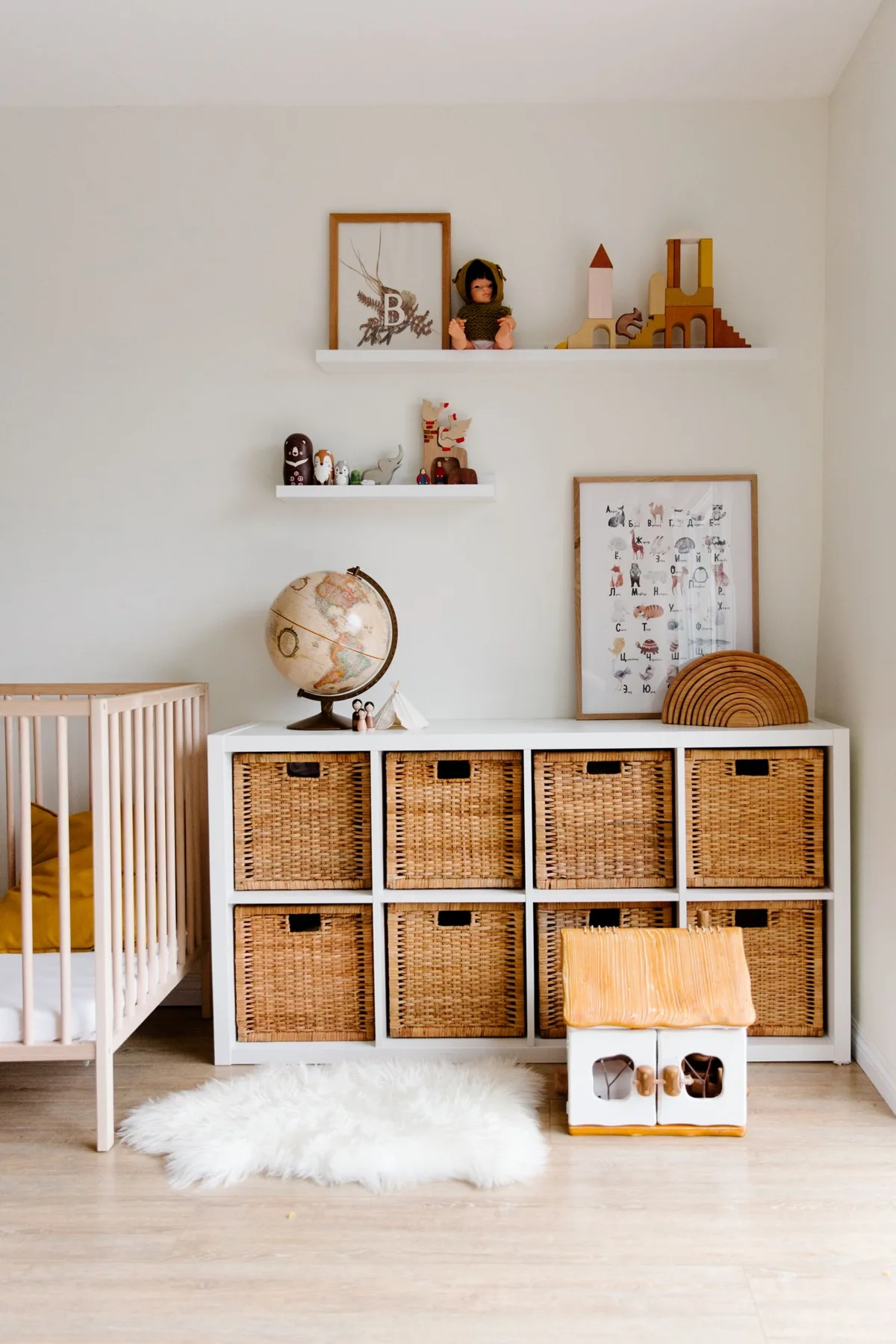
Choose suitable containers for the actual objects and follow relevant product safety information. Keep small pieces away from children for whom they are inappropriate. Do not mix several unrelated sets into one large box simply because it makes the floor look clear.
Leave enough room in the container for ordinary return without perfect packing. Labels or pictures can help identify contents where appropriate, with adult support as needed. The storage should be understandable to the people using it, not require one person to reconstruct an exact display every evening.
Give unfinished projects an agreed pause
Choose a household-appropriate way to pause an unfinished activity. A suitable tray or defined surface may work for some objects, while other projects need to be put away. Check weight, stability and access rather than improvising a high shelf for anything that should remain untouched.
Agree on how long the pause position can be used and what happens when the room needs to change. A clear conversation is more useful than a storage product that silently becomes permanent overflow. The goal is to respect current activity while preserving the room's other necessary jobs.
Reset only the shared route first
When time is short, make the doorway and essential walking routes clear before sorting every object. Then return the pieces through their suitable storage positions with the help appropriate to the household. Keep the routine realistic and avoid turning every pause into a complete room reorganization.
Our family-zones guide helps when play shares the living room. The weekend-at-home guide can coordinate activities without filling the whole day. Review the collection if the floor becomes unmanageable repeatedly; adding another basket may conceal rather than solve the problem.
Check the active zone after the household has used the room for another task. Notice whether the storage remains accessible or whether a chair, laundry basket or visitor bag has taken over the return route. Choose one small adjustment that protects the zone without claiming the entire room permanently. If the activity needs more space than the shared room can provide, plan another suitable location rather than squeezing the objects into the doorway. Keep a clear distinction between a short pause position and long-term storage so unfinished work does not gradually occupy every usable surface.
Play-zone questions
Does every activity need a separate corner? Not necessarily. A small room can use one suitable zone at different times, with a clear storage handover.
Should an unfinished project stay out overnight? Choose an arrangement suitable for the objects, household access and other room needs. A blanket rule will not fit every home or activity.
What if containers are always overflowing? Check the active collection and whether the categories suit the actual objects. Reduce or reorganize appropriately before expecting a larger storage product to make the return routine easier.