How to Choose an Everyday Tote Without Buying Too Much Bag
Compare size, closure, straps and weight against the things you carry on an ordinary day.

Shopping note: The retailer links in this article are ordinary links. We are not currently using affiliate tracking. If a link earns us a commission in the future, we will label it. Our disclosure.
Start with the real day
An everyday tote can look like the simplest possible purchase until it becomes the place where everything disappears. The right size depends on your ordinary load, your route and how often you need to find a small item quickly. Start by emptying your current bag onto a table. The contents give you more useful information than a product photograph with carefully selected props.
Separate daily essentials from objects that have stayed in the bag out of habit. Then identify the largest item you regularly carry. That might be a laptop, a notebook or a folded layer. Measure it, including any protective sleeve. A tote’s outside dimensions do not always describe the usable opening or interior, so check the retailer’s details carefully before assuming something will fit.
Choose the carry style before the color
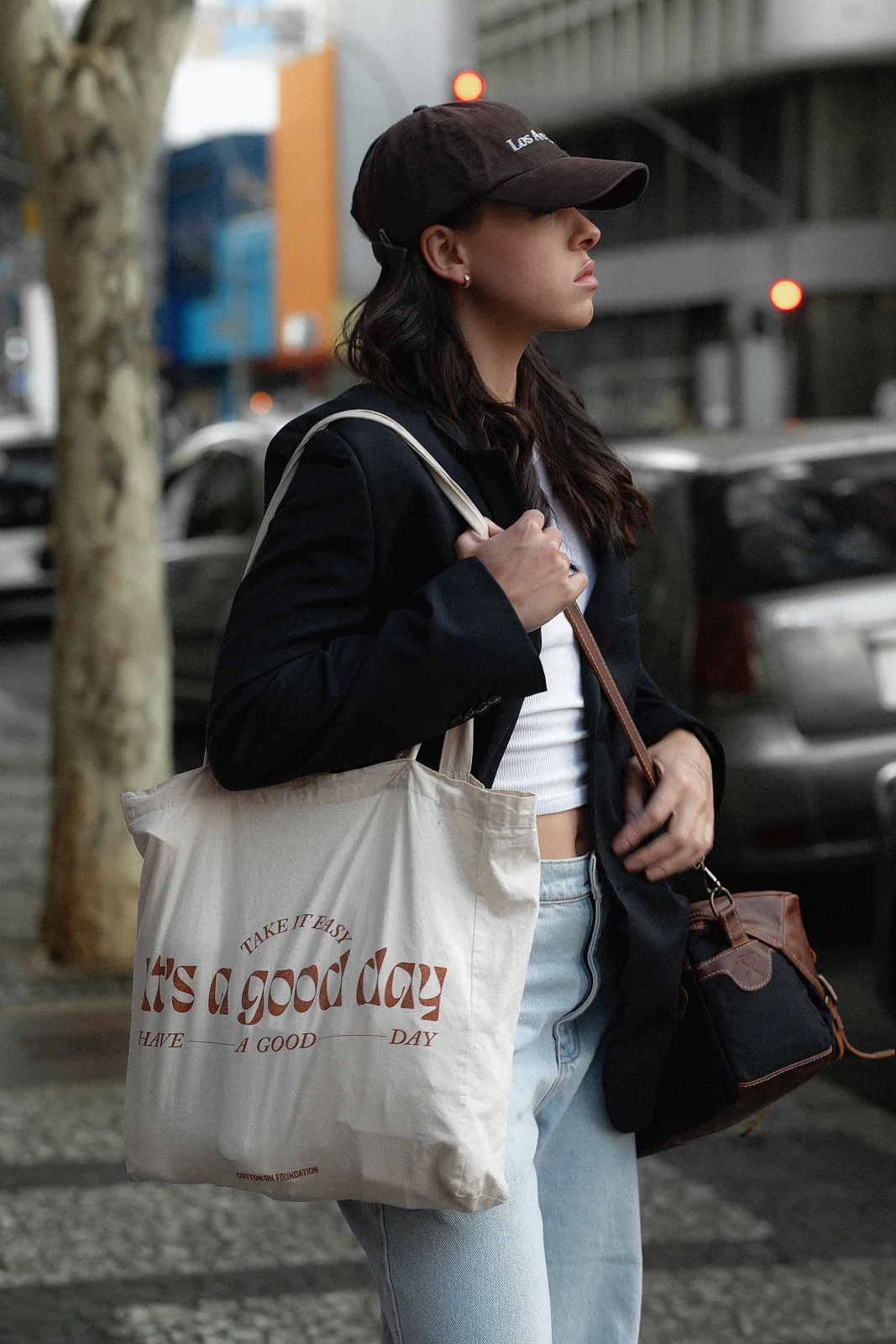
Handle drop affects whether a tote can sit comfortably over the outerwear you normally wear. Short handles may work well in the hand and poorly over a coat. A shoulder strap can offer another option, but its attachment and adjustment matter. Try the bag with a representative load where possible, following store rules and return conditions. Empty weight is worth considering because it joins everything else you carry.
Structured bags can keep their shape and make some contents easier to locate. Softer bags can fold away and adapt to awkward items. The tradeoff is not simply expensive versus inexpensive; it is about the way the bag behaves in use. Consider where it will be placed during the day, including floors, chair backs and the available space beside a desk.
Decide how much closure you need
An open tote gives quick access but may allow contents to shift or spill. A zipper adds a step and can limit the opening width. A snap offers another compromise, without making the whole bag fully enclosed. Choose based on the journey and your own handling habits. No closure should be treated as a guarantee of security.
Internal pockets can help with a phone or keys, but too many narrow compartments may remain unused. If you move between bags, a small removable pouch may be more practical than a complicated built-in organizer. Check whether the lining is easy to see into and whether care instructions fit the bag’s intended use. Pale interiors can improve visibility while showing marks more readily.
Spend for a useful feature
Set a budget and name the problem a new bag should solve. If your current tote lacks only a place for small items, a pouch may address it. If the straps are worn or the opening is too narrow for your everyday load, replacement makes more sense. Compare construction details that the retailer actually describes, and avoid treating brand recognition as evidence of durability.
Skip the oversized version unless the extra capacity has a clear role. More space often invites more weight and more miscellaneous contents. A tote should suit the day you have most often, with occasional needs handled separately. Before committing, imagine loading, carrying, opening and storing it. That sequence gives you a better buying decision than choosing the bag that looks most impressive when it is empty.
A short checklist to keep
Keep these decisions somewhere useful rather than turning them into another elaborate system. For this project, the most important comparison is between what already works and what a purchase would actually change. Provides a simple starting point for an informal daily bag. Soft sides can make small items difficult to find. That tradeoff is worth weighing before choosing the everyday canvas tote simply because it appears in an attractive room or outfit.
An alternative is to focus on the compact zip pouch. Moves loose essentials between bags as a group. It takes space and can add another layer to search. Compare the two jobs instead of assuming both purchases are necessary. Start with the option that addresses the repeated inconvenience you have identified. When neither problem is happening in your household, keep using what you have. A buying guide should make it easier to decide against an unnecessary purchase as well as help you choose a useful one.
- Measure the largest everyday item.
- Check handle drop over usual outerwear.
- Compare closure and usable opening.
- Consider empty weight as part of the load.
Shop with a purpose
Options to consider
These are research starting points, not hands-on test results. Compare current specifications, dimensions, care instructions, return terms, and availability with the retailer before buying.
Everyday canvas tote
Provides a simple starting point for an informal daily bag.
The tradeoff: Soft sides can make small items difficult to find.
Explore at the retailer ↗Compact zip pouch
Moves loose essentials between bags as a group.
The tradeoff: It takes space and can add another layer to search.
Explore at the retailer ↗A few common questions
Do I need to buy everything mentioned?
No. Begin with what you own, then choose only the item that solves a specific problem. The everyday canvas tote and compact zip pouch have different jobs; neither is a requirement for following the advice.
What should I compare before ordering?
Check dimensions or garment measurements where relevant, current care and use instructions, delivery charges and return conditions. In particular, remember this tradeoff: Soft sides can make small items difficult to find. Use the retailer’s current information rather than assuming a photograph answers those questions.